If you like this please Link Back to this article...
Tuesday, January 4, 2011
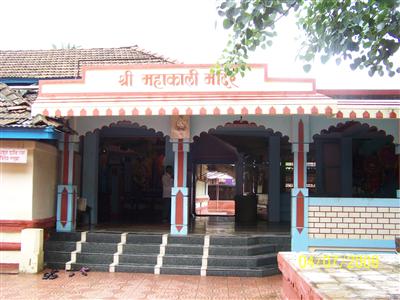
MAHAKALI TEMPLE - ADIVARE
Labels:
PLACES OF INTEREST IN KONKAN
MAHALAKSHMI TEMPLE - KELSHI
If you like this please Link Back to this article...
Labels:
PLACES OF INTEREST IN KONKAN
YAQUB BABA DARGA
If you like this please Link Back to this article...
Labels:
PLACES OF INTEREST IN KONKAN
CHANDIKA MANDIR
If you like this please Link Back to this article...
Labels:
PLACES OF INTEREST IN KONKAN
FORT AMBOLGAD
The Fort of Ambolgad was primarily built to keep an eye on the ancient port of Musakaji and the surrounding seas. Col. Imlock captured this Fort for the British in 1818. The residential portion of Ambolgad was shifted out completely by 1862.
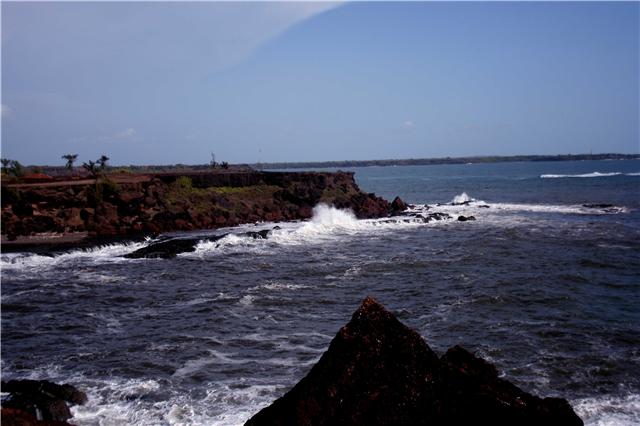
Ambolgad is situated at a height from the main sea level. The total area covered by the Fort is approximately 1200 Sq. Metres. It has the sea guarding it from the South and has deep moats on the northern and western side. The current condition of the fort is very bad. A small part of the fortification and walls on the sea side are still visible. Apart from this, there is a square well and remnants and plinths of various constructions in the fort. The Math of Gagangiri Maharaj is situated near the Fort.
If you like this please Link Back to this article...
SHRI GAGANGIRI MAHARAJ
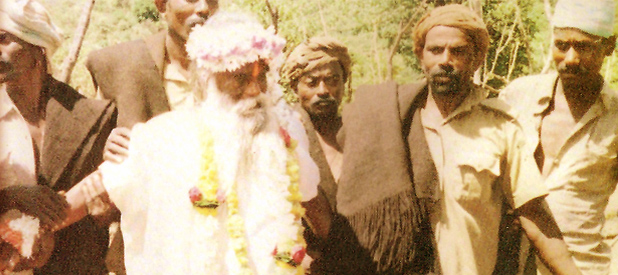
Shri Gagangiri Maharaj was born as Shripad Patankar at Manadure Village in Patan district of South Maharashtra. At the age of seven, he was sent to a Matha of Nath sampradaya which was located a relatively unknown place called Battees-Shirala. At a very early age he took Sannyasa.After taking sannyasa he started travelling with Mahants of Nath Sampradaya. During pilgrimages he learnt yoga and several occult and religious practices. He travelled far and wide to places such as Nepal, Bhutan, Manas Sarovar, Gaurishankar, Gorakshdarbar, Gorakhpur, Pashupatinath and returned to Almora. Finally, he travelled through the Valley of Ganga, Himachal Pradesh and reached Badrika Ashram.
Gagangiri Maharaj was extremely tired as a result of his peregrinations and he decided to settle in a cave. When he was relaxing, a sage wearing saffron robes came there from the mountains. He sprinkled water from his Kamandalu, on the face of Gagangiri Maharaj. He also gave him some kind of green grass to eat which resembled coriander leaves. For his penance, he had prepared mattresses of grass. He found his mattresses growing like living vegetation. This was considered as an experience, where Tantrik technique is perfected. He did a number of Kaya Kalpas. In this process he invented several new concepts in Tantrik techniques and proved them true. He did penance at a number of places like Mauli Kund, Mauli Kada, Zanzu water, Mausame Kada, Kasarbari, Ginger water, Sat-barkund, Holi Kada, Margaj water, Jungledeo patti, Shirale etc.
During monsoon, he stayed in the cave at Garbhagiri, Gagangiri. He did penance in a pond near the river at Sangashi, Vazar, Vesraf, Palsambe, Ramling etc. Later he went to Vijaydurg, in the Konkan area from where he reached Bombay by steamer. During 1945 to 1948, he did Kayakalpa at Angale, near Rajapur in Konkan. As more and more people benefited by his meditation, more and more people started worshipping and respecting him, and his reputation spread all around. In those days Ministers like Yeshvantrao Chavan, Balasaheb Desai, Rajarambapu Patil, Kapse and several respected officers used to worship him.
Swamiji then decided to move all over India alone on foot and accordingly his journey started. At this time, his fair skin was glowing with health. Attired in saffron robes of a sanyasi, he was revered by people. He travelled on foot from Haridwar to Delhi, Bhopal, etc. At Bhopal while he was taking rest after bath near a tank, the princely ruler of Kolhapur and his retinue happened to be nearby while on a brief visit. Swamiji's mother tongue being Marathi, a conversation between him and Kolhapur ruler's retinue ensued resulting in the Ruler requesting Swamiji to accompany him to Kolhapur. In 1932 the Raja of Kolhapur had been to Dajipur jungle for hunting. Swamiji who had accompanied him stayed back in the jungle, where he lived from 1932 to 1940. He spent these years in meditation and deep reflection.
In Bombay between 1948 to 1950, he stayed in Dadi Hirji Parsi graveyards, near the temple of Maruti, at shidi near Walkeshwar. Guru pournima (full moon day of Ashadha month for worshipping the Guru) used to be celebrated on a big scale at Birla Kreeda Kendra in Bombay,in spite of all these preoccupations in respect of the society/ he has continued his penance for over 60 years.
He used to travel between his ashrams in Khopoli and Gaganbawda. He has a huge number of devotees in Maharastra, Madhya Pradesh, Gujarat, Karnataka and Andhra Pradesh.
Gagangiri Maharaj took samadhi on 4 February 2008 at his Khopoli Ashram.
If you like this please Link Back to this article...
Labels:
SHRI GAGANGIRI MAHARAJ
Saturday, January 1, 2011
HIRANYAKESHI
The nearby Maruti Mandir was built by a holy baba from Goa. The Hiranyakeshi is a Purvamukhi River means east facing,the river Hiranyakeshi flows eastwards. Fishing can be enjoyed at the river. Its flow around 80Km and then joins the Ghataprabha River.
Cave Temple :
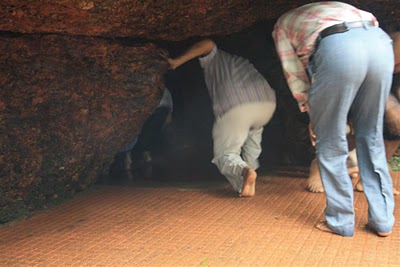
Next to this temple, there is an entrance to a cave which is not safe to enter in the monsoons when it becomes a safe harbour for a lot of creepy crawlies.
Local people say that an expeditiation was held in 1981 a seven member team from Pune which revealed that there are seven water Kunda (pond)behind the temple and after that there is also a cave which can accomodate 200 people. The place is a delight for natural beauty lovers. The area is covered by dense forests and you can even spot some rare breed of birds in this area.
If you like this please Link Back to this article...
Labels:
PLACES OF INTEREST IN KONKAN
AMBOLI
Amboli lies in the Sahayadri Hills of Western India, one of the world's "Eco Hot-Spots" and it therefore abounds in a variety of fairly unique flora and fauna. However, as in the other parts of the Sahaydri Hills, denudation of the forest cover and unregulated government assisted "development" (read "hotels, resorts & highways") are gradually ruining a once pristine environment.
Historically, Amboli village came into being as one of the staging posts along the road from Vengurla port to the city of Belgaum, which was extensively used by the British to supply their garrisons in south and central India.
The hills of Amboli village provide one of the sources of the Krishna river (The "Ganges" of south India) and an ancient Shiva temple (called Hiranyakeshi) exists at the cave where the water emerges. The main attraction for tourists is the incredibly high rainfall (7 meters average per year!)and the numerous waterfalls and mist during the monsoons. Legend has it that there are 108 Shiva temples in and around Amboli of which only a dozen have been uncovered, one as recently as 2005. There aren't too many places to see or things to do but its quiet, unpolluted and the local residents are good natured and helpful.
If you like this please Link Back to this article...
Labels:
PLACES OF INTEREST IN KONKAN
DERVAN
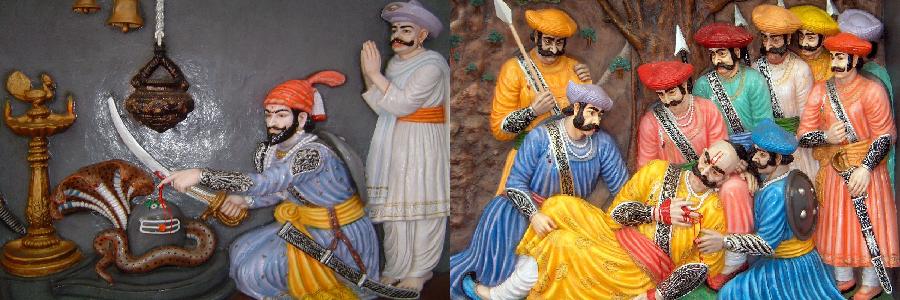
Dervan is located at 19 km from Chiplun, where you can watch the entire life history of King Shivaji through pictures and statues. This memorial is known as ‘Shivsrushti’. Shivsrushti was established by Shree sant Sitarambua Walawalkar Trust. Near about one crore rupees and 15 years were spent in construction of Shivsrushti.An artist of Mumbai named Ganesh Patkar has developed these statues with his workmates. Construction of memorial looks like a fort. Tourists gets welcomed by Mavlas(soldiers) of Shivaji and two elephants residing at the entrance. Birth of Shivaji, coronation of Shivaji Maharajah, sacrifice of Bajiprabhu, fight with Shahistakhan, etc are some of the notable statutes to watch here.
If you like this please Link Back to this article...
Labels:
PLACES OF INTEREST IN KONKAN
SHIVTHAR GHAL
The Mores ruled over the region of Javali where Shivthar Ghal is situated. This place is strategically important and very difficult to conquer. These people were serving Adilshah, but even he had no powerful control over them. Chandrarao was the title conferred upon them by Adilshah. Shivaji Maharaj defeated them and brought this region under his control in 1648. Ramdas Swami came to reside here in 1649, and stayed till 1660. Dasbodha was written here. Before proceeding on "Dakshin Digvijay", his great campaign in the southern India in 1776, Shivaji Maharaj took Ramdas Swami's blessings here. For many years this place was undiscovered. However in 1930, 300 years after Shivaji Maharaj was born, Shankar Krishna Dev, an eminent follower of Ramdas Swami, discovered this great pilgrimage.
Ascending the steps we reach the building constructed by "Shivthar Ghal Shree Sunder math Samiti". The organization has provided many facilities to all who come to this sacred place. They have maintained the sanctity of the place and keep it clean. In the main hall we see a portrait of Ramdas Swami. A small well-built path leads to the main cavern where Ramdas Swami used to meditate. This place is beyond our imagination. No words can describe its beauty. A waterfall outside the cavern adds to the beauty of the place. We can realize why Ramdas Swami chose this place to compose Dasbodha.
If you like this please Link Back to this article...
Labels:
PLACES OF INTEREST IN KONKAN
Subscribe to:
Posts (Atom)