Showing posts with label FORTS IN KONKAN. Show all posts

Wednesday, January 26, 2011

FORT MANDANGAD

kanchan athalye | Wednesday, January 26, 2011 | Best Blogger Tips
Bankot Fort or Fort Victoria or HimmatGad (als...

Mandangad and Bankot were built to safeguard the trade route through Savitri River, which was an important trade route.

It is said that Mandangad was built by King Bhoj. In 1661 it was under Jaswantrao Dalvi, an Adilshahi Sardar. He was the person who had besieged Vishalgad during Shivaji Maharaj’s daring escape from Panhalgad. When Shivaji Maharaj defeated Kartalabkhan and was marching towards Dabhol, Mandangad was on the way. Hearing this news, Jaswantrao ran away to Shringarpur and Shivaji Maharaj got it without a fight. It was with Angres and Siddis for some time. The British captured it in 1818.
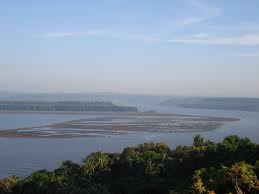
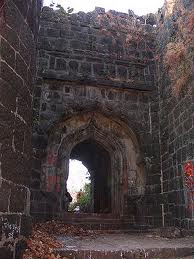
There are 2 summits for the mountain on which Mandangad is built. On the higher one there is a water tank. The fortification is seen on the lower and more flat part. The entrance is destroyed, but the bastions stand. The Ganesh temple here is reconstructed. We can see Savitri River, Raigad and Varandha pass on a clear day.
Enhanced by Zemanta
Stumble
Delicious
Technorati
Twitter
Digg
Facebook
Reddit
Feed

If you like this please Link Back to this article...


Stumble Upon Toolbar

FORT KARNALA

kanchan athalye | Wednesday, January 26, 2011 | Best Blogger Tips
Karnala fort, Maharashtra, India
Its exact date of formation is not known but likely it predates 1400 CE as under the Devagiri Yadavs(1248–1318) and under the Tughlaq rulers(1318–1347), Karnala was the capital of the north Konkan districts of their respective empires. It later fell under the command of the Gujarat Sultanate but in 1540 was taken over by Nizam Shah of Ahmednagar. The Gujarat sultans then requested the help of the Dom Francisco de Menenzes the commanding officer of the Portuguese at Bassien(modern day Vasai) to win it back. He ordered 500 of his soldiers to Karnala fort and they were able to capture it. The fort was left in charge of the Gujarat Sultanate but with Portuguese garrisons.
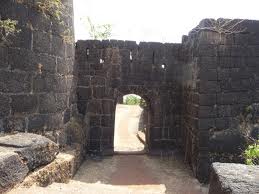
Entrance to Karnala fort, Maharashtra, India
The loss of Karnala enraged the Nizam Shah and he took back the fort and the surrounding countryside by sending 5,000 of his men. The Gujarat sultans fled to Vasai in panic and gave up any claims of the fort to the Portuguese. In the subsequent battle between the Nizam Shah and the Portuguese, the latter were victorious in repulsing further attacks of the Nizam Shahi army and the fort remained with the Portuguese. However the Portuguese viceroy determined that the forts of Sangli and Karnala were of little value to them and decided to give them to the Nizam Shah for an annual payment of Rs. 17,500(or 5,000 gold pardoas) to further their friendship.
Shivaji conquered it from the Portuguese in 1670 by building breastworks as he advanced. After his death in 1680 it was taken over by Aurangzeb. After this the Mughals occupied it for some time after which it in 1740 with the rise of the Peshwas of Pune it went to them. It remained under the command of killedar (garrison commander) Anantrao until a colonel Prother won the fort and established the rule of the British East India Company there in 1818.
Karnala fort actually consists of two forts one at a higher level and other lower. At the centre of the higher level is a 125 feet high basalt pillar. It is also called Pandu's tower. This structure was used as watchtower when the fort was occupied however now it is in a ruined condition. The presence of bee hives also makes it difficult to climb and have resulted in at least one casualty in recent times. There is a water cistern which provides fresh water all year long. From the top the forts of Prabalgad and Rajmachi are clearly visible.
The fort has two inscriptions one in Marathi and the other in Persian. The Marathi inscription which has no date is seen on the lower gate on the inner side. Its words are indecipherable. The Persian writing is on upper gate reads "Syed Nuruddin Muhammad Khan, Hijri, 1147 AH (1735 CE) and probably dates from the Mughal occupation of the fort.

Enhanced by Zemanta
Stumble
Delicious
Technorati
Twitter
Digg
Facebook
Reddit
Feed

If you like this please Link Back to this article...


Stumble Upon Toolbar

Sunday, January 23, 2011

FORT YESHWANTGAD

kanchan athalye | Sunday, January 23, 2011 | Best Blogger Tips
 Yashvantgad Fort, on the north entrance of the Rajapur creek, with the sea on the south and a ditch to the north and west, has an area of about seven acres. In 1862, the walls and gates with their seventeen bastions needed repair. There was no garrison, and only twenty-eight old unserviceable guns. [Gov. List of Civil Forts, 1862.] The supply of water and provisions was abundant.

Yeshwantgad is an island fortification off the coast of Maharashtra in Ratnagir, district. It is built on the Rajapur, creek with the sea on one side. On three sides it was protected by a ditch which can no longer be seen. On the fourth side there was a wall with 17 bastions. Now the walls are in a ruined condition. Its gate was on the eastern side. A ship (HMS Outram sank here on the 1st January, 1817 after which a lighthouse at nearby Jaitapur was built. Other than this no notable historical events took place here.


Stumble
Delicious
Technorati
Twitter
Digg
Facebook
Reddit
Feed

If you like this please Link Back to this article...


Stumble Upon Toolbar

Saturday, January 22, 2011

FORT NIVTI

kanchan athalye | Saturday, January 22, 2011 | Best Blogger Tips
 Nivti Port, in the village of Kochra, six and a half miles south of Malvan and eight north of Vengurla, stands at the mouth of a small creek in rather a striking bay. Rennell (1788) suggested that Nivti was Ptolemy's (150) Nitra and Pliny's (77) Nitrias, ' where the pirates cruized for the Roman ships'. But this is very doubtful, and as far as has been traced, Nivti has never been of importance as a centre of trade. [Rennells Memoir of a Map of Hindustan, 31. Nitra or Nitrias is more commonly identified with the Periplus (247) Naoura and so probably with Honavar (Lassen's Ind. Ant. III. 67). In 1819 its trade was insignificant, Malvan Resident to Gov. 31st May 1819; Revenue Diaries 141 of 1819, 2299.] The average yearly value of trade, for the five years ending 1877-78, was £3167 8s. (Rs. 31,674) of which £2604 16s. (Rs. 26,048) represented exports and £562 12s. (Rs. 5626) imports. [Nairne's MS. Tieffenthaler (Res. Hist et. Geog. I 513) described it (1760) as a very scarped rock strengthened with seven towers. It had a ditch on the land and was inaccessible from the sea.]

Nivti fort, on a very picturesque and well wooded headland about 150 feet high, is a complete ruin. [Nairne's Konkan, 105.] In 1786 it was taken by the Kolhapur troops and soon after restored to Savantvadi. [A wing of the 89th Regiment; 2½ battalions native infantry; 3 troops of native cavalry and artillery. Nairne's Konkan, 127.] In the early years of the present century (1803 and 1810), after being taken and retaken by these rival chiefs, it in the end remained with the Savants. In 1818, when British power was established, the southern villages continued to suffer from the raids of the Savantvadi garrisons of Nivti and Redi. Under Sir W. G. Keir a force [The details were: the head-quarters of the IVth Rifles, crossing the river at Karli, arrived before Nivti. on the 2nd February 1819. On the 3rd the batteries opened and on the following day the fort capitulated and was taken. Service Record of H. M.'s IVth Rifles, 29.] was sent into the Konkan, and on the 4th February 1819 Nivti was invested and given up without resistance. [Gov. List of Civil Forts, 1862.]
Stumble
Delicious
Technorati
Twitter
Digg
Facebook
Reddit
Feed

If you like this please Link Back to this article...


Stumble Upon Toolbar

Tuesday, January 4, 2011

FORT AMBOLGAD

kanchan athalye | Tuesday, January 04, 2011 | Best Blogger Tips
The Fort of Ambolgad was primarily built to keep an eye on the ancient port of Musakaji and the surrounding seas. Col. Imlock captured this Fort for the British in 1818. The residential portion of Ambolgad was shifted out completely by 1862.

Ambolgad is situated at a height from the main sea level. The total area covered by the Fort is approximately 1200 Sq. Metres. It has the sea guarding it from the South and has deep moats on the northern and western side. The current condition of the fort is very bad. A small part of the fortification and walls on the sea side are still visible. Apart from this, there is a square well and remnants and plinths of various constructions in the fort. The Math of Gagangiri Maharaj is situated near the Fort.
Stumble
Delicious
Technorati
Twitter
Digg
Facebook
Reddit
Feed

If you like this please Link Back to this article...


Stumble Upon Toolbar

Wednesday, December 22, 2010

KILLE SUVARNADURG

kanchan athalye | Wednesday, December 22, 2010 | Best Blogger Tips
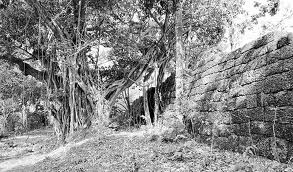
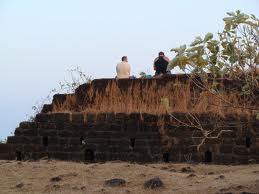
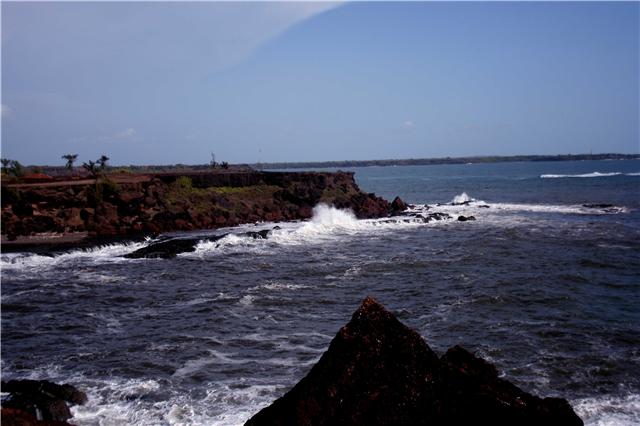
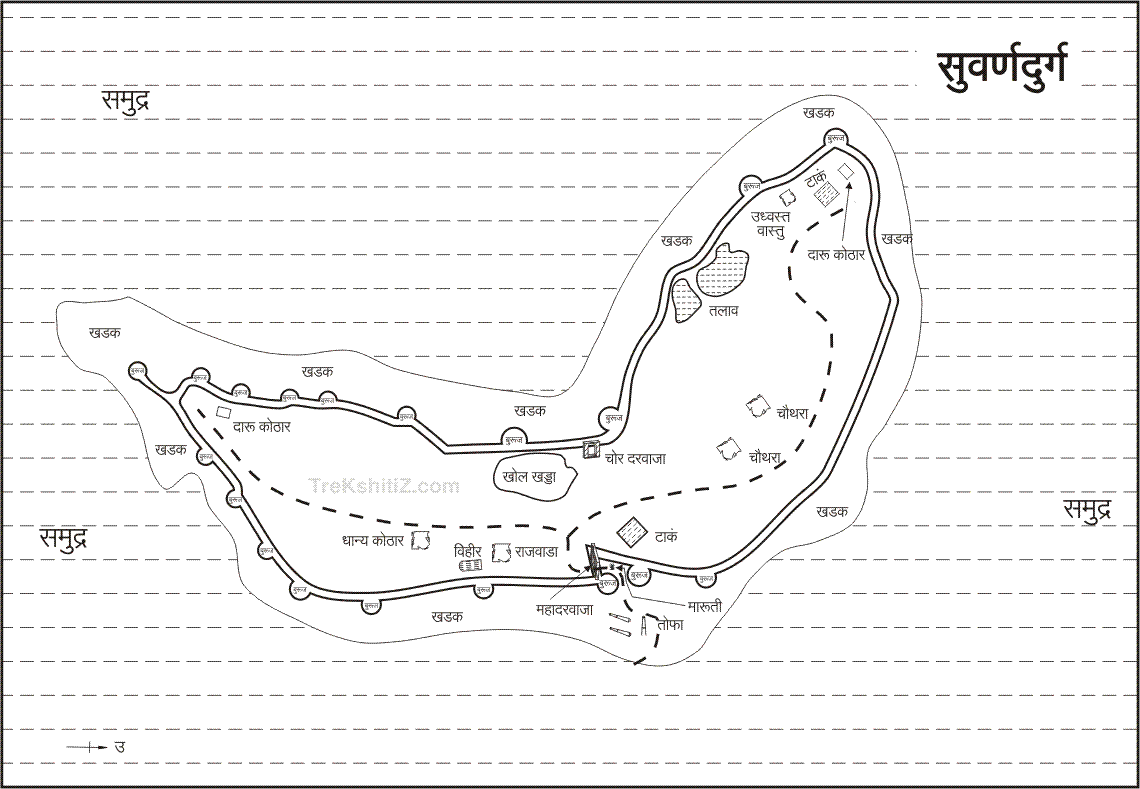
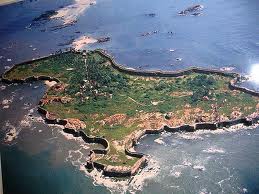
Suvarnadurg is a fort that is located on a small island in the Arabian Sea, near Harne in Konkan, along the West Coast of India, in the state of Maharashtra. The fort also includes another land fort (small) called the Kanakadurga at the base of headland of Harne port on the coast. Building of the fort is credited to Sultan Adilshah of Bijapur. The forts were captured by Shivaji, founder of the Maratha Empire, in 1660. 

Subsequently, Shivaji, other Peshwas and the Angres further fortified the forts for defence purposes.
The literal meaning of Suvanadurga is “Golden Fort” as it was considered as the pride or the “ feather in the golden cap of Marathas”. Built for the Maratha Navy for defence purposes, the fort also had a ship building facility. The basic objective of establishing the fort was to counter enemy attacks, mainly by the colonialists of Europe and also by the local chieftains. In the past, the land fort and the sea fort were connected by a tunnel, but now defunct. The present approach to the sea fort is only by boats from the Harne port on the headland.
The fort is on an island in the Arabian Sea on the west coast within the jurisdiction ofRatnagiri District, off the Kanakadurga fort and below the headland Harne port. Kanakadurga, the harbour fort, built originally as a strategic link to the sea fort has a lighthouse. Harne, near the dilapidated Kanakadurg fort, is an important harbour, which is right on the edge of the land that protrudes into the Arabian Sea. This is a natural harbour known for large fishing and marketing. It is conjectured that the Kanakadurga fort and other land side forts such asBankt Fort, Fategad fort and Goa fort were built primarily as look out forts for the security of the Suvarnadurg fort. There is no landing jetty at the Suvarnadurga fort. However, the landing is on the shores of the sandy beach of the rocky island. Another feature of the area is that a narrow channel separates the Gova, Kanakadurg and Fattehgarh forts on the mainland.
The forts have recorded history linked to the Adil Shah Dynasty (1490 to 1686) of theBijapur Sultanate. However, linking its history to an earlier era of the Satavahana (230 BC to 220 AD) is considered a speculation since no proof could be established to this claim. The forts were captured by Chatrapati Shivaji in 1660 by defeating Ali Adil Shah 11 (1656–1672). Kanhoji Angre (1667–1729), popularly known as “Samudratla Shivaji” was the Admiral of theMaratha Navy; in 1696, Kanhoji's naval fleet was stationed here. However, the fort was formally handed over to Kanhoji in 1713 by Shahu Raja.
Kanhoji Angre who was also known as Angria was appointed in 1698 as Admiral of the Maratha Naval Fleet by thePeshwas. He had complete control over the west coast, from Mumbai to Vingural, except for the fort of Janjira, which remained with the British (for 200 years). Angre was considered to be a mercenary who attacked defenceless towns and also traders. He even attacked the East India Company’s ship in 1702 and refused to release the British captives (six of them). He severed his relations with the Peshwas in 1704 and was called “the Rebel Independent of the Raja Shivaji”. In spite of warning by the British that he should not attack or capture British ships, he captured their ships in 1707. He had a free run of the west coast from Surat to Dabhol and captured all private vessels. When Shivaji’s grandson was imprisoned, Kanhoji got his opportunity to stake his claim for independence. In 1713, he had captured Peshwa’s general Bhairu, which forced the Peshwa general Balaji Rao (Commander-in-Chief of the Maratha forces) to come to an agreement with him. For maintaining "fealty" with the Sataras (Chatrapati Shivaji's family stronghold), he was granted 26 forts and its dependent villages, which included Suvarnadurg. In subsequent years, these forts became strong holds for piracy. With his new ordered control, Kanhoji held complete control over a coast line stretching over a coast length of 240 miles (390 km) and 40 miles (64 km) width extending from Mumbai to Vingurla to the south. He later entered into an agreement with the British, which went against him as the British flouted all terms with him. Humiliated by this treatment by the British he decided to attack them. He entered into an alliance with the Raja of Satara, equipped his vessels and manned them by the best crew consisting of Dutchmen. He also employed a Jamican pirate as his chief gunner. Many European pirate forces had also joined his army after the Treaty of Utrecht of 1713-14 (comprising a series of individual peace treaties among several European states includingEngland, France and Spain, among others). With this force, he terrorized the East India Company.

Kanhoji relentlessly carried on his fight against the British and in 1721 joined hands with thePortuguese; when 33 British soldiers were killed, 21 wounded and many ammunition and field guns were seized by the Marathas. In 1722, when Kanhoji was to attack the English factory at Karwar, in spite of the British sending their ships 'Victoria' and the 'Revenge' to attack Kanhoji's forces, he was not cowed down; even though his Dutch Commander was killed and his 16 ships were captured. However, he died on 4 June 1729, an unvanquished hero for 31 years against all foreign attacks. It is said that "Had he been in England, like Drake, he would have been knighted and lionised as a national hero, but in India he died merely as an independent ruler who never permitted any foreign ruler to filch even a part of his precious little dominion”.
He had two legitimate and two illegitimate sons, and Sambaji his legitimate son was given control of Suvarnadurg. Following the death of one of the brothers in 1734, there were intence fights and acts of piracy continued. In spite of attacks by the British in 1732, Sambaji was back in Suvarnadurg unharmed. However by 1749, Tulaji, the step brother of Sambaji, had become very powerful and his ships sailed unharmed, even much bolder than what his father Kanhoji had achieved. This situation forced the Peshwas to join hands with the British to suppress Tulaji. In 1755, they jointly attacked Tulaji’s strong hold of Suvarnadurg and took control of the fort within 48 hours. Suvarnadurg was then given to the Peshwas that was considered a humiliating surrender by the Peshwas to the British.
Subsequent to Kanhoji's demise, Tulaji Angre took charge of Suvarnadurg and it became the seat of his power. However, he fell foul of the Peshwas. He was considered arrogant. In the war with Tulaji, Peshwas were supported by the British. The joint siege of the fort lasted from March 25 to 2 April 1755. On 12 April 1755, Commodore James captured the fort and formally handed it over to the Peshwas. However, this support proved detrimental to the Peshwas, as the British extracted, as a reward, control over the Bankot fort but only allowed the Peshwas to have control over the Suvarnadurg. In 1802, Bajirav Peshwa under attack by the Holkars was trying to take refuge in this fort but had to flee to Vasai as he was chased to the fort by the Holkars. In 1818, Captain William of the British army attacked the fort and took full control of it on 4 December 1818. Soon thereafter the other forts also came under British control. The fort was thus under the control of the Peshwas till 1818. The fort has witnessed a scene of “triumph and tragedy, of the display of heroic courage and abject cowardice.”
The Angrias are also credited with not only strengthening the fort but also establishing the ship building yard at Suvanadurg and creating a large fleet of warships to secure the west coast, the Konkan coast, from attack from theBritish, French, Dutch and Portuguese colonialists. It is also inferred that the small forts (Goa, Kanakadurga, Bankot fort, Fattegad fort and Goa fort) were primarily built by Kanhoji Angre to defend Suvarnadurg from any enemy attack from the land route.
Stumble
Delicious
Technorati
Twitter
Digg
Facebook
Reddit
Feed

If you like this please Link Back to this article...


Stumble Upon Toolbar

KILLE JANJIRA (MURUD – ALIBAG)

kanchan athalye | Wednesday, December 22, 2010 | Best Blogger Tips
Murud-Janjira is the local name for a fort situated at the coastal village of Murud, in the Raigad district. It is famous for being the only fort along India's western coast that remained undefeated despite Maratha, Dutch and English East India Company attacks.

The word Janjira is not native to India, and may have originated after the Arabic word Jazeera, which means an island. Murud was once known in Marathi as Habsan, or Abyssinian's land. Some of the people also split the name as "JAL JEERA" meaning fort in the water.

 The name of the fort is a concatenation of the Konkani and Arabic words for Island, "morod" and "jazeera".The word "morod" is peculiar to Konkani and is absent in Marathi.Thus, during the rains, the fields get flooded,but the morods never flood.The State of Murud-Janjira was known to the Maratha Empire as Habsan,the land of the Habshis.

It is really good to see this fort. the coventers of this fort is really different from other forts.Sambhaji Maharaj (Son of Chatrapati Shivaji Maharaj)constructed a fort on a nearby island (Padmadurg Fort, now known as Kasa). Kasa is not accessible to the public and requires special permission from the Navy.

Murud doesn't just have a Beach & the fort. It also has a Temple over the hill next to the New Bus Depot (known as Datta cha Dongar) Hill of Lord Dattatray. One can have a paranormic view of Murud  both the islands together from the hill.

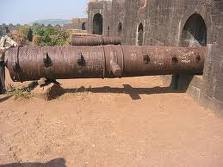
Further ahead of the hill is an idga, the walk though the dense jungle is a experience in itself. The fort also boasts of a sweet water lake inside it. It is considered to be a miracle that the Fort surrounded by the salty water of the sea has a lake full of sweet water. Also the cannons in the fort are quite unique. The biggest cannon boasts a range of around 18 km. It is said that since the entire cannon could not have been transported at once they had to be brought in pieces and they were then assembled inside the fort.
When the rulers of the fort gave up their rule they settled in a near by village and named it Rajpuri (meaning end of the Rule, Raj = Rule and Puri = End)
Enhanced by Zemanta
Stumble
Delicious
Technorati
Twitter
Digg
Facebook
Reddit
Feed

If you like this please Link Back to this article...


Stumble Upon Toolbar

Sunday, December 12, 2010

KILLE JAIGAD

kanchan athalye | Sunday, December 12, 2010 | Best Blogger Tips

Last village in Ratnagiri Tehsil is Jaigad. After crossing the creek in the village, one reaches the Guhagar Tehsil. Jaigad is the natural port and famous since ages. When major transportation was by sea – routes. This is one of the rare ports where ships can directly berth to the jetty. This was the major port in 50’s when Goa – Mumbai ship service was in full stream. Over the time with advent of national highways and closure of ship services, Jaigad lost its glamour and now is a remote port.

Lighthouse situated in the fort guides ships traveling between Dabhol (near Dapoli) and Ratnagiri. With the proper development of this natural port, Jaigad can once again be the hub of marine activity and has the potential to become an alternative port to Mumbai. Its scenic location and natural port facility are the silent features of the Jaigad Fort.
Enhanced by Zemanta
Stumble
Delicious
Technorati
Twitter
Digg
Facebook
Reddit
Feed

If you like this please Link Back to this article...


Stumble Upon Toolbar
TOP
To Get Latest Update Subscribe Now !!!